
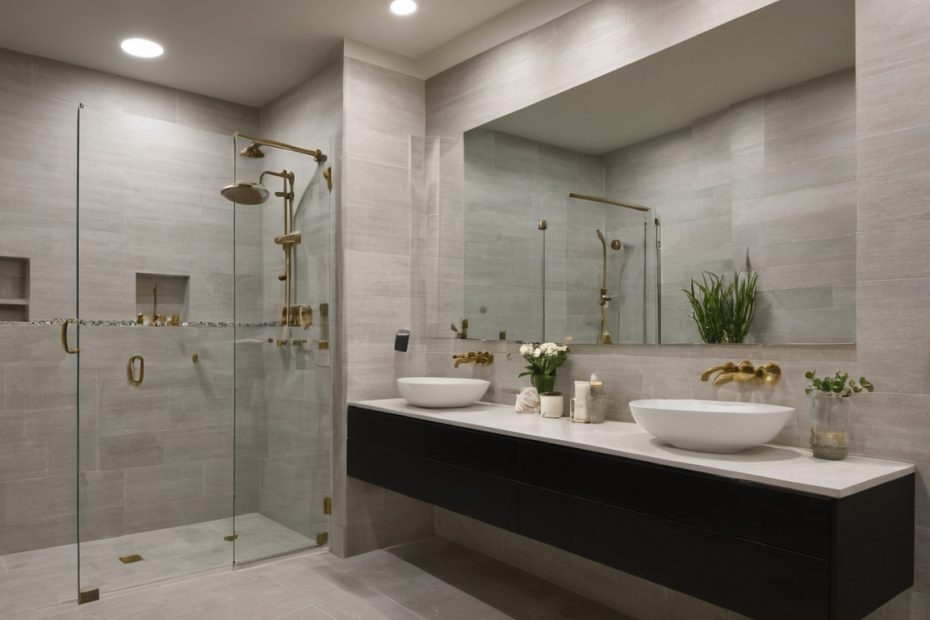
A bathroom remodel quote becomes comparable only after one decision is fixed: are you changing finishes, fixtures, waterproofing, or the service layout behind the walls and floor? Price the scope category before tile, because the largest variations usually come from drains, substrates, membranes, ventilation, electrical work, approvals, and loss of daily access.
A bathroom remodel scope should be classified before finishes are priced
A bathroom remodel should be scoped as cosmetic, fixture-led, waterproofing-led, or full services relocation before anyone prices tile, tapware, or cabinetry. That separates visible choices from hidden work such as drains, membranes, subfloors, electrical protection, exhaust, and inspections.
Cosmetic bathroom remodels change surfaces but not wet-area risk
A cosmetic bathroom remodel is the narrowest scope: repainting dry walls, changing cabinet pulls, replacing a mirror, updating towel rails, fitting accessories, or refreshing loose items without opening walls, moving fixtures, disturbing tiles, or altering waterproofing. It can improve daily use, but it should not be treated as a cure for leaks, movement, or stale air.
Cosmetic quotes should state that plumbing locations, drainage, membranes, wall linings, subfloor structure, and tile substrates remain untouched. The scope should stop if grout cracks repeatedly, tiles sound hollow, the floor feels springy, silicone has black staining behind it, paint blisters near the shower, or the room smells damp after ordinary use. The U.S. Environmental Protection Agency advises fixing wet or damp spots promptly to help prevent mold growth in homes: EPA mold and moisture guidance.
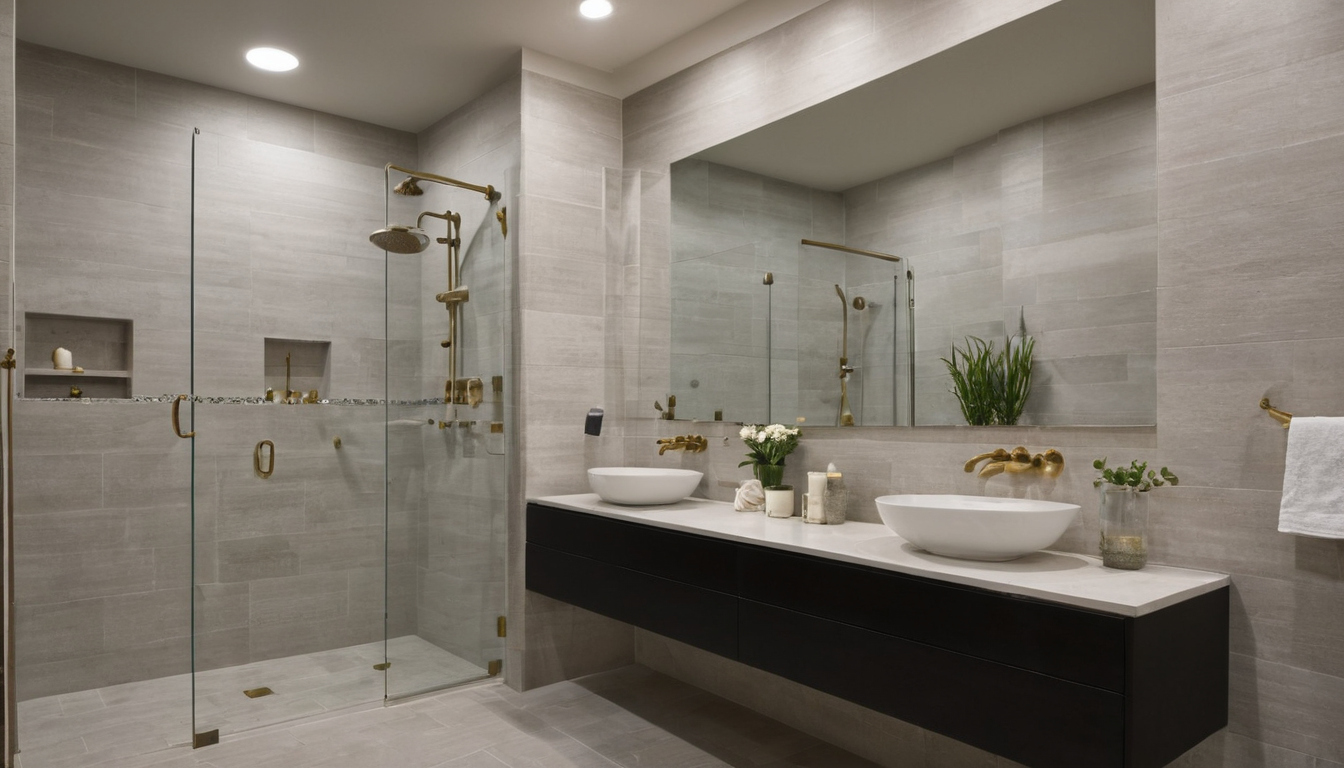
A bathroom remodel scope should be classified before finishes are priced shown with finish, fixture, and clearance relationships visible.
Fixture-led bathroom remodels keep services in place but still need compliance checks
A fixture-led bathroom remodel replaces the vanity, toilet, basin, tapware, bath, shower screen, mirror cabinet, or fan while keeping service points in the same general location. “Same location” does not mean “same connection.” A new vanity can clash with an existing trap, a wall-hung toilet may need framing depth, and a shower screen may require a plumb fixing surface.
Quotes should identify each product by model or allowance, then list assumed rough-in positions: supplies, waste diameter and height, trap access, shut-off valve access, cistern position, fixing points, and door or drawer clearances. Ventilation also belongs in this review. Washington’s mechanical ventilation rules state that covered whole-house ventilation supply and exhaust fans must meet energy-code efficacy requirements and be installed according to manufacturers’ instructions: WAC 51-51-1505 Section M1505.
Waterproofing-led and full services bathroom remodels change the construction contract
A waterproofing-led bathroom remodel begins once the project disturbs shower bases, tiled floors, membranes, wall linings, niches, penetrations, thresholds, or wet-area corners. This scope usually needs demolition, substrate assessment, fall correction, membrane installation, tile build-up coordination, curing time, and documented responsibility for the wet area.
A full services relocation goes further. Moving a toilet, shower, bath, basin, floor waste, or exhaust route can trigger plumbing rough-in, drain falls, venting, slab cutting or joist review, structural floor repair, electrical relocation, waterproofing redesign, and inspection or certification where local rules require it.
- Classify first: cosmetic, fixture-led, waterproofing-led, or full services relocation.
- Name permit triggers: plumbing, electrical, structural floor work, waterproofing, exhaust, and building-management approval.
- Assign responsibility: demolition findings, substrate repair, membrane system, inspection process, and handover documents.
The bathroom remodel decisions that move cost fastest are usually hidden
The biggest bathroom remodel cost shifts usually occur when the project changes the building fabric rather than the finish schedule.
| Hidden decision | Scope trigger | Cost/schedule effect | Quote wording to request |
|---|---|---|---|
| Move toilet, shower, bath, or basin drains | New fixture positions, wall-hung toilet, linear drain, freestanding bath, or larger shower | Adds plumbing set-out, slab or floor opening, pipe fall checks, venting review, patching, and possible approvals | “Include drain relocation, venting compliance, repair, penetrations, testing, and making good.” |
| Open slabs, joists, or structural floors | Existing waste route cannot achieve fall, joists block the outlet, or prior work is defective | Can require engineer input, carpentry, structural repair, acoustic treatment, and a hold point | “State assumptions for slab cutting, joist drilling, approvals, and concealed damage.” |
| Change waterproofing build-up | Curbless shower, wet room, failed membrane, moved screen line, or replaced subfloor | Changes screed depth, falls, thresholds, tile cuts, curing time, and warranty documents | “Specify membrane system, primers, tapes, penetrations, cure times, and handover certificate.” |
| Upgrade exhaust or electrical items | Poor extraction, new ducting, lighting, heated rails, smart mirrors, or vanity outlets | Adds ducting, controls, licensed rough-in, protection-device checks, repairs, and testing | “Include fan route, controls, rated fittings, protection devices, final certification, and code responsibility.” |
Moving drains changes more than the bathroom remodel layout
Drain relocation is where many bathroom renovation ideas become building decisions. A like-for-like basin swap may need isolation, reconnection, and sealant. A relocated toilet can require slab cutting, a ceiling opening below, pipe fall checks, trap and vent coordination, and waterproofing around new penetrations.
Apartment bathrooms add shared-service risk. Waste stacks, acoustic layers, fire-rated penetrations, and exhaust routes may belong to the building rather than the apartment owner. The quote should identify who obtains approval, protects common areas, and signs off work affecting shared services.
Waterproofing build-ups change floor heights, thresholds, and tile detailing
Waterproofing is not a vague wet-area allowance. A membrane system has substrate requirements, primers, tapes, corner treatment, penetration detailing, compatible adhesives, and curing time. Those choices can raise the finished floor, alter the door threshold, change the screen set-out, and force different tile cuts at wastes, niches, and wall-floor junctions.
A curbless shower is the clearest test. The design must resolve fall to waste, tile size, drain position, membrane continuity, glass fixing, and doorway water control before pricing.
Ventilation and electrical upgrades can turn a simple bath reno into licensed trade work
Ventilation scope depends on local code, fan type, duct route, controls, and discharge location. In Washington State, where local exhaust or whole-house mechanical ventilation is provided, WAC 51-51-1505 Section M1505 governs design. The same section permits local exhaust fans to serve as part of a whole-house system only with proper controls, and it includes a maximum 1.0 sone sound rating requirement for whole-house ventilation fans under stated conditions and exceptions.
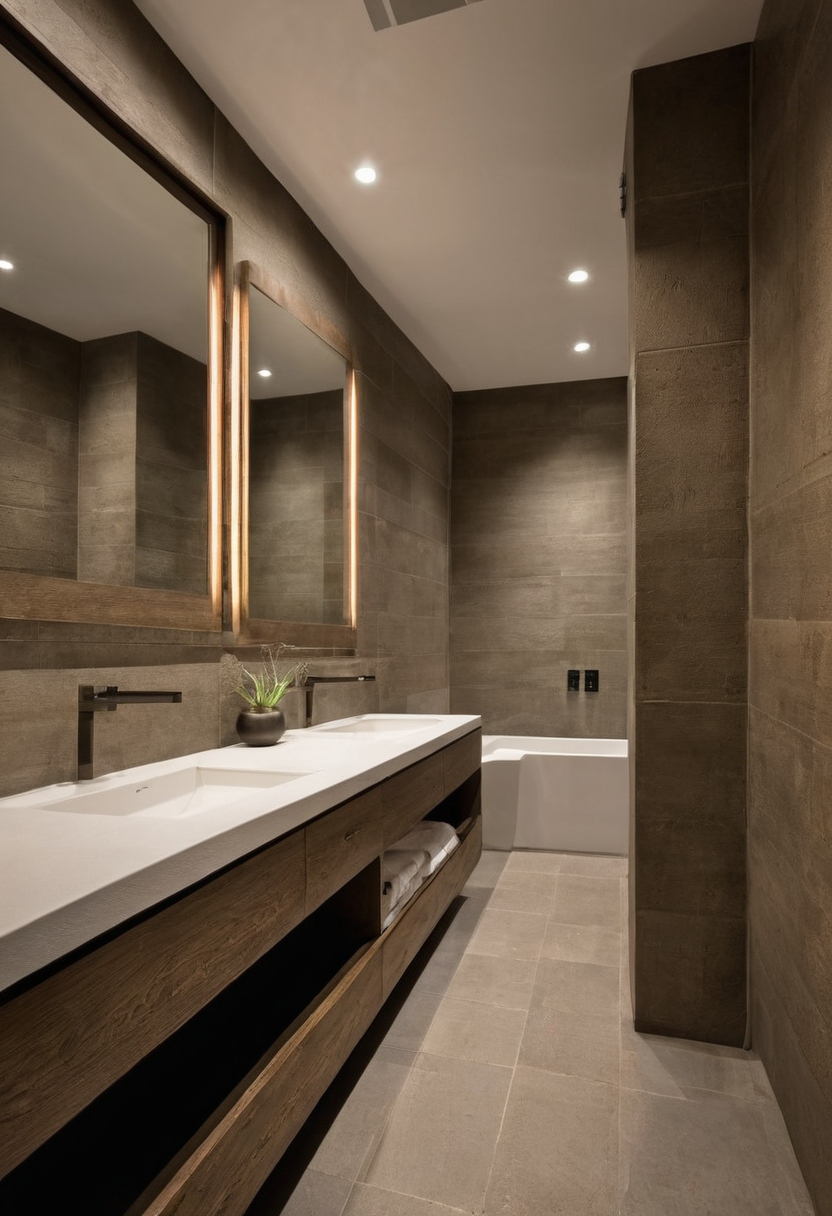
The bathroom remodel decisions that move cost fastest are usually hidden shown with finish, fixture, and clearance relationships visible.
Electrical scope changes quickly when a bath reno adds LED downlights, a lit mirror, heated towel rail, underfloor heating, or a vanity outlet. ENERGY STAR states that qualified LED lighting uses at least 75 percent less energy and lasts up to 25 times longer than incandescent lighting, but efficient lighting still needs correct wet-area placement, switching, protection, and access for replacement. If an accessible vanity or seated grooming surface is part of the brief, the 2010 ADA Standards set accessible work surfaces at 28 to 34 inches above the finished floor or ground for the conditions they cover.
Bathroom remodel design should freeze layout decisions before quotes are compared
Bathroom remodel design should freeze fixture positions, wet-zone build-ups, door swings, storage depth, lighting locations, and access clearances before comparative quotes are requested.
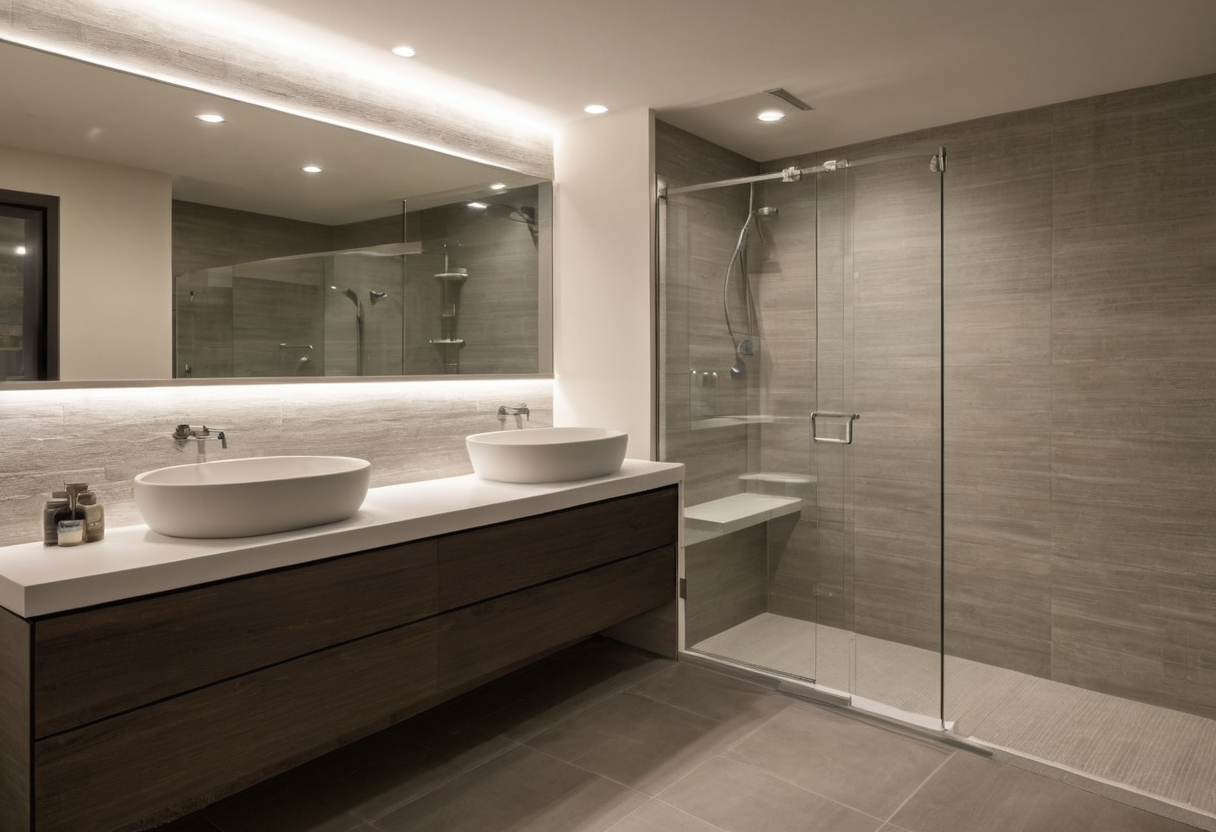
Bathroom remodel design should freeze layout decisions before quotes are compared shown as a planning reference for layout, scale, and material decisions.
A small bathroom remodel needs clearance checks before style decisions
A small bathroom remodel fails fastest when attractive fixtures consume the working space. Before choosing a freestanding vanity, wall-hung toilet, larger basin, or frameless screen, the measured plan should show wall lengths, window positions, door swing, ceiling height, existing drains, water supplies, outlets, switches, and exhaust routes.
- Confirm projection from the wall: toilet pans, vanity basins, towel rails, and shower screens can look correct on elevations while blocking knees, elbows, or door movement.
- Test circulation at scale: show fixture centers, shower entry, cabinet doors, towel access, and the door swing on the proposed plan.
- Check accessibility early: the 2010 ADA Standards for Accessible Design specify a 30 by 48 inch clear floor or ground space for wheelchair positioning in accessible design.
Bathroom tile ideas must be checked against falls, cuts, niches, and waterproofing
Bathroom tile ideas are not surface-only decisions. Tile size, thickness, slip resistance, edge type, variation, and laying direction affect shower falls, floor waste set-out, niche dimensions, threshold height, external corners, and waterproofing returns. Large-format tiles can reduce grout lines, but they can be harder to form neatly to a small shower drain unless the substrate, falls, and waste location suit the format.
- Request a tile set-out for floor wastes, niches, thresholds, and feature walls before ordering.
- Ask the tiler to confirm substrate tolerances, movement joints, and tile compatibility with the waterproofing system.
- Judge finish quality through design quality as specification, proportion, and execution, not through tile price alone.
Storage and lighting decisions should match daily bathroom use
Bathroom remodel suggestions should start with the morning routine: shaving, makeup, medicines, towels, cleaning products, hair tools, toothbrush charging, night use, and shared access. Mirror lighting, ambient lighting, task lighting, outlets, fan switches, and heated towel rail positions should be fixed before quotes, because late electrical changes can disturb waterproofed or tiled surfaces.
A realistic bathroom remodel schedule follows trade sequencing, not inspiration images
A realistic bathroom remodel schedule follows trade dependencies: demolition, rough plumbing, rough electrical, substrate repair, waterproofing, cure checks, tiling, grouting, cabinetry, glass, final fixtures, sealants, ventilation commissioning, and defect review.
Demolition should include a decision point for hidden bathroom damage
The first schedule test is the pause after strip-out, when the contractor can see whether the existing bathroom can accept the new work. Demolition scope should name adjacent-room protection, dust control, disposal, isolation, and removal depth: fittings only, tiles and linings, screed, subfloor, or wall framing.
The inspection point should check for rot, mold, corroded pipework, cracked slabs, loose substrate, failed waterproofing, and unsafe wiring. If the quote assumes sound substrate, the contract should state how hidden damage will be priced before waterproofing starts.
Procurement delays can stop the bathroom remodel even when trades are available
Procurement sits on the critical path because rough-in dimensions depend on real products, not mood boards. Wall-hung toilets, concealed mixers, niches, heated towel rails, mirror cabinets, fans, and custom vanities all need data sheets before plumbing and electrical positions are fixed.
Stock confirmation should cover tiles, trim profiles, tapware, wastes, bath, toilet, vanity, lighting, exhaust fan, waterproofing products, adhesives, grout, sealant, and shower screen hardware. For wider project control, turnkey renovation sequencing and contractor coordination is the same discipline applied at a larger scale.
Indoor air also belongs in the schedule. The U.S. Environmental Protection Agency identifies paints, varnishes, waxes, cleaning products, building materials, and furnishings as common indoor sources of volatile organic compounds, and recommends increasing ventilation when using VOC-emitting products indoors in its indoor air quality guidance.
Final fix should not begin until wet-area performance is documented
Final fix should start only after wet-area work has been checked against the specified system. The project file should include local inspection records where required, waterproofing certificates or photographs, product batch details where relevant, and manufacturer cure times for membranes, screeds, adhesives, grout, and silicone.
The practical test is direct: run the shower, check drainage falls, inspect seals, test hot and cold supplies, confirm fan extraction, operate lighting and protected outlets, check underfloor heating controls if installed, and open the shower screen through its full travel. For natural stone, the Natural Stone Institute recommends neutral cleaners, stone soap, or mild liquid dishwashing detergent with warm water, and warns that scouring powders or abrasive creams can scratch stone surfaces in its care guidance.
A bathroom remodel scope of work should make exclusions and responsibilities visible
A bathroom remodel scope of work should convert design intent into quoted construction responsibilities, so competing prices describe the same work rather than different assumptions.
How do you write a scope of work for a bathroom renovation?
A useful bathroom renovation scope starts with drawings, not adjectives. Attach the measured plan, demolition plan, proposed layout, elevations for niches and vanity heights, finish schedule, fixture schedule, lighting schedule, and a responsibility matrix that says owner-supplied or contractor-supplied for every item.
- Demolition and disposal: include tile removal, fixture disconnection, floor buildup removal, adjacent-room protection, waste handling, and the process for rotten framing or damaged subfloor.
- Rough-in and compliance: list plumbing, drainage, electrical, fan ducting, isolation valves, protection where locally required, permits, inspections, and licensed trade certificates.
- Wet-area construction: name substrate repair, screeds or falls, waterproofing membrane system, penetrations, cure times, testing where specified, and handover documentation.
- Finishes and final fix: state tile format, tile set-out, grout, trims, vanity, toilet, tapware, shower screen, mirror, lighting, accessories, painting, final cleaning, and defect walk-through.
Ventilation should not sit in a vague “allow fan” line. In Washington, WAC 51-51-1505 Section M1505 says each dwelling unit must have a whole-house mechanical ventilation system designed under the listed subsections, so local code checks can affect bathroom remodel design and contractor responsibility.
Prime cost items and provisional sums should not hide bathroom remodel risk
Prime cost items are usually supply allowances for fixtures or finishes not finally selected. Provisional sums are usually estimates for work not fully defined, such as subfloor repair or drain relocation. Both can make quotes look comparable while moving real cost outside the signed number.
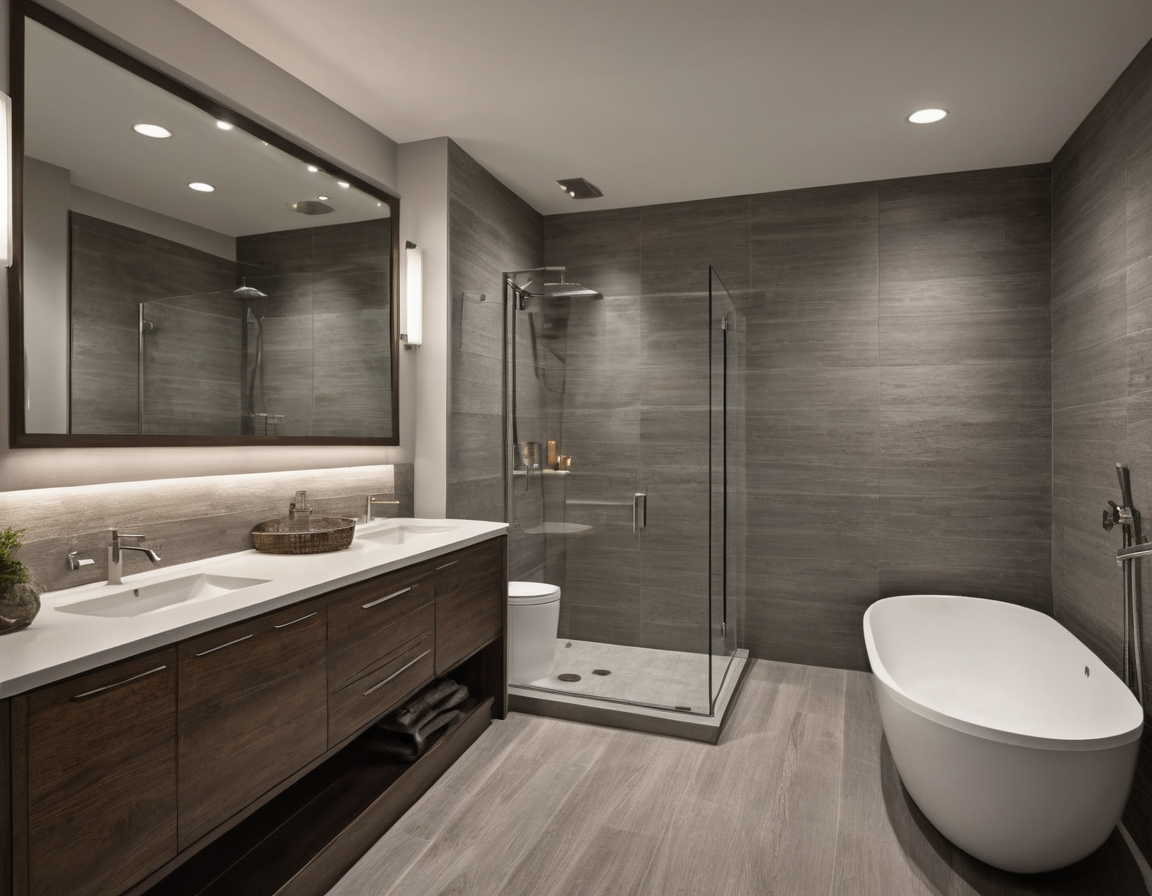
A bathroom remodel scope of work should make exclusions and responsibilities visible shown with finish, fixture, and clearance relationships visible.
Before signing, separate labor, fixed materials, prime cost allowances, provisional sums, permits, inspections, contingency, and exclusions. Specify tiles, tapware, toilet, vanity, fan, lighting, bath, shower screen, towel rails, robe hooks, niches, and final cleaning.
Daily bathroom use constraints should shape renovation ideas before design refinement
Daily use constraints should shape bathroom renovation ideas before the design is refined, especially in a one-bathroom home, apartment building, or household with children, elderly users, pets, medical needs, or shift workers.
A one-bathroom home needs a different remodel plan than an empty property
A one-bathroom home should be planned around dependency, not only finish selection. Before approving bath reno ideas, list who uses the bathroom, at what times, and what cannot be interrupted. A household with school mornings, night shifts, mobility limits, or medication routines needs a tighter phasing plan than a vacant property.
Temporary use should be decided before demolition starts. Options may include a temporary toilet, a temporary shower connection, gym access, family arrangements, hotel nights, or a short stay elsewhere during demolition, plumbing disconnection, waterproofing cure time, and final commissioning.
Apartment bathroom remodels need building approvals before trade dates are booked
Apartment bathroom remodels carry operational constraints that can delay a ready design. Building management, strata, HOA, or landlord rules may control work hours, lift bookings, contractor insurance, parking, common-area protection, waste removal, water shut-offs, and neighbor notification. These requirements should sit inside the scope.
Shared services need special caution. Drain relocation, core drilling, exhaust routing, waterproofing certificates, licensed trade documentation, and work affecting common pipes can require approval before materials arrive. Classify the bathroom remodel by construction scope, household dependency, and building constraints before refining finishes.
FAQ
What is the 30% rule in remodeling, and does it apply to a bathroom remodel budget?
The 30% rule is often used as a contingency habit, meaning a remodel budget should allow room above the visible quote for changes, damage, upgrades, or omissions. It is not a code requirement. For a bathroom remodel, contingency is most useful when demolition may reveal subfloor damage, drain constraints, failed waterproofing, or electrical issues.
How do you write a scope of work for a bathroom renovation before asking for quotes?
Write the scope with measured drawings, fixture schedules, finish schedules, demolition limits, waterproofing responsibilities, plumbing and electrical assumptions, inspection requirements, prime cost items, provisional sums, exclusions, and handover documents. The aim is to make each contractor price the same bathroom remodel scope.
What bathroom renovation mistakes do contractors see most often?
Common mistakes include buying fixtures before checking rough-in dimensions, treating failed grout as a cosmetic issue, choosing large tiles without checking falls, moving drains without approval, ignoring ventilation, and comparing quotes that contain different exclusions.
What is usually the biggest expense in a bathroom remodel?
The biggest expense is often labor tied to demolition, plumbing, waterproofing, tiling, substrate repair, and trade coordination, rather than a single visible product. Luxury tile or tapware can raise the finish budget, but service moves and wet-area rebuilding usually change construction cost more sharply.