
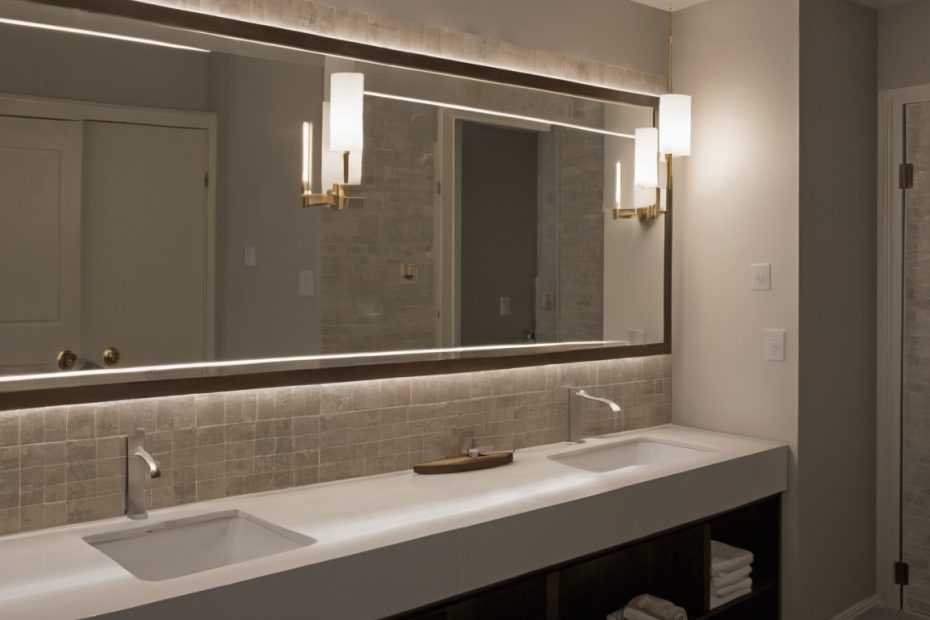
An overlay is viable only after checking the existing glass, concealed attachment, wall substrate, added weight, edges, moisture, and nearby electrical fittings.
Can you safely install a new mirror over an existing bathroom mirror?
A mirror-on-mirror installation can be safe when the complete load path is known and the new mirror does not depend on an uncertain old adhesive bond.
| Decision | Required conditions |
|---|---|
| Proceed | Sound glass, verified support, manageable weight, dry edges, compatible materials, and clear fittings. |
| Proceed conditionally | Sound mirror but uncertain adhesive; transfer the new load to framing or rated anchors. |
| Remove instead | Cracks, movement, distortion, blackened edges, corrosion, moisture damage, inaccessible wiring, or an unknown load path. |
A mirror-on-mirror bathroom installation is viable only when the complete load path is known
The load path includes the new glass, frame, hardware, old mirror, old adhesive or clips, and wall substrate. Visible clips are not proof because concealed adhesive and damaged drywall may remain hidden.
Glass handling requires suitable protection. For occupational work, prescription eyewear must fit beneath or be incorporated into required eye protection. Hand protection must suit identified hazards under OSHA hand-protection requirements.
How should the existing bathroom mirror and wall assembly be inspected?
Reject the mirror as an overlay base if it is cracked, loose, bowed, severely desilvered, moisture-damaged, or attached to a failing or unknown substrate.
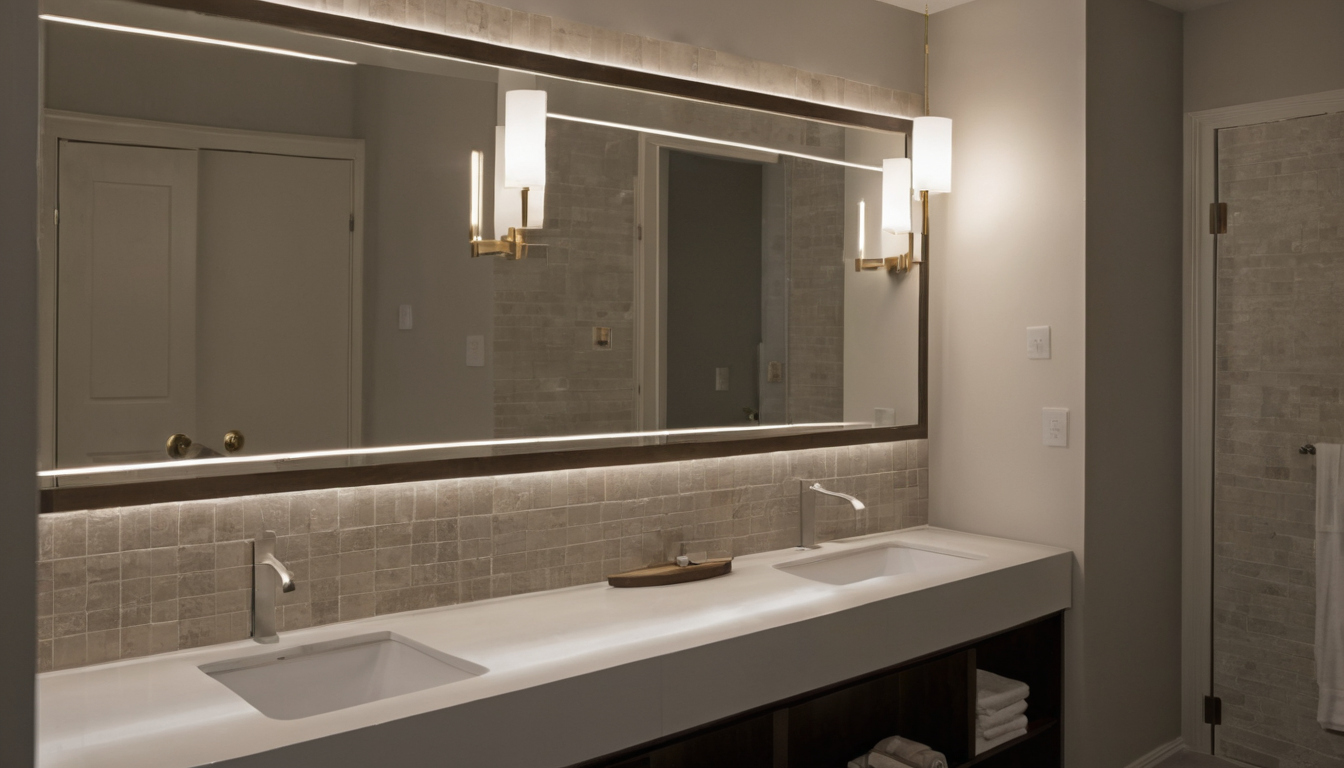
How should the existing bathroom mirror and wall assembly be inspected shown with finish, fixture, and clearance relationships visible.
Which glass defects rule out a bathroom mirror overlay?
- Stop: cracks, deep chips, delamination, loose safety backing, pronounced bowing, or movement under light contact.
- Investigate: blackened edges, failed caulk, distorted reflections, adhesive shadows, or corrosion behind the silvering.
- Document: identify the glass type and safety backing. Do not drill, notch, or cut installed glass unless a qualified glass professional confirms fabrication is permissible.
A rocking straightedge or wavy reflection suggests an uneven surface that may cause variable adhesive depth, concentrated stress, and distorted reflections.
How can you tell whether a bathroom mirror is glued or mechanically supported?
- Look for clips, channels, rosettes, frames, fasteners, or setting blocks.
- Examine accessible edges for adhesive pads, tape, or mirror mastic without inserting tools behind the glass.
- Do not pry, strike, or test-load the mirror. Concealed adhesive coverage and drywall condition rarely can be confirmed non-destructively.
Which bathroom conditions require professional inspection?
Call a glazier for large mirrors, damaged edges, corroded clips, loose tile, damp wallboard, hollow wall areas, or restricted access. If a leak wets moisture-sensitive materials, the EPA advises drying affected areas within 24 to 48 hours. Use a licensed electrician where the design meets outlets, lights, defoggers, drivers, or concealed wiring.
Which mounting method is safest for a mirror over another mirror?
The safest method transfers the new mirror’s weight to verified wall structure. Never make an unknown old mirror bond carry a new load.
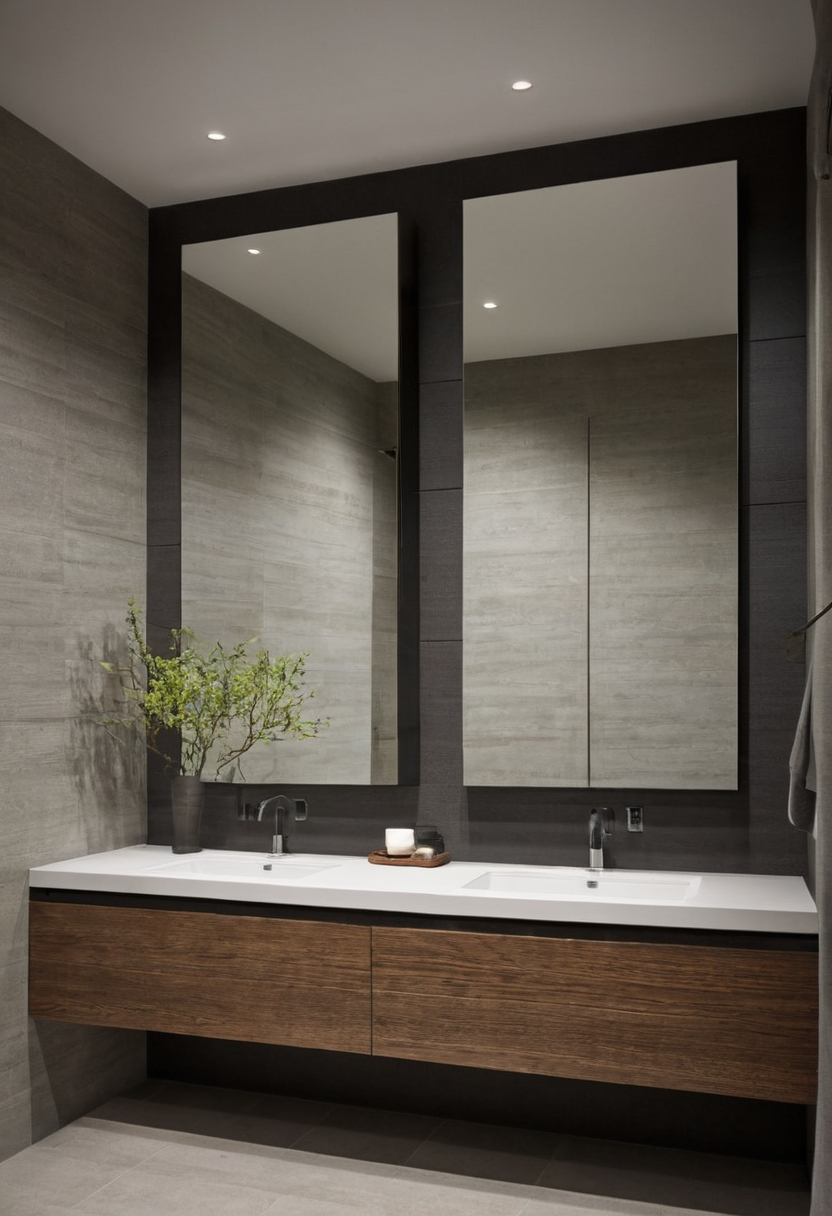
Which mounting method is safest for a mirror over another mirror shown with floor, wall, and fixture relationships visible.
| Method | Load path | Principal risk |
|---|---|---|
| Direct adhesive | Through the old mirror | Backing or concealed bond failure |
| Wall-fixed frame | Frame to verified anchors | Weak anchorage |
| Clips or channels | Hardware to wall structure | Point loading at edges |
| Remove and replace | New system on exposed wall | Breakage and wall repair |
When is direct adhesive bonding between two mirrors acceptable?
Direct bonding is acceptable only with written manufacturer confirmation for the new backing and old mirror’s nonporous face. Instructions must address preparation, bead pattern, spacers, temperature, humidity, fixture time, full cure, maximum load, and bracing. Increase ventilation for products emitting volatile organic compounds, as recommended by the EPA.
When should clips, channels, or a retaining frame support the new mirror?
Use mechanical retention when hardware can reach framing or rated anchors without loading or drilling the old glass. Select hardware from manufacturer load tables using assembled weight, substrate, fastener count, embedment, spacing, and edge distance. Gaskets and setting blocks should prevent hard point contact.
Adhesive-only mounting is unsuitable when product compatibility cannot be documented
Reject general construction adhesive, hot-melt glue, ordinary tape, removable strips, and unapproved sealants. Mirror adhesive may be intended for porous walls rather than glass-to-mirror bonding.
Will a mirror overlay interfere with outlets, lighting, edges, or the finished bathroom design?
An overlay can expose damaged edges, double reflections, block electrical access, crowd the faucet, or create a recess that traps condensation.
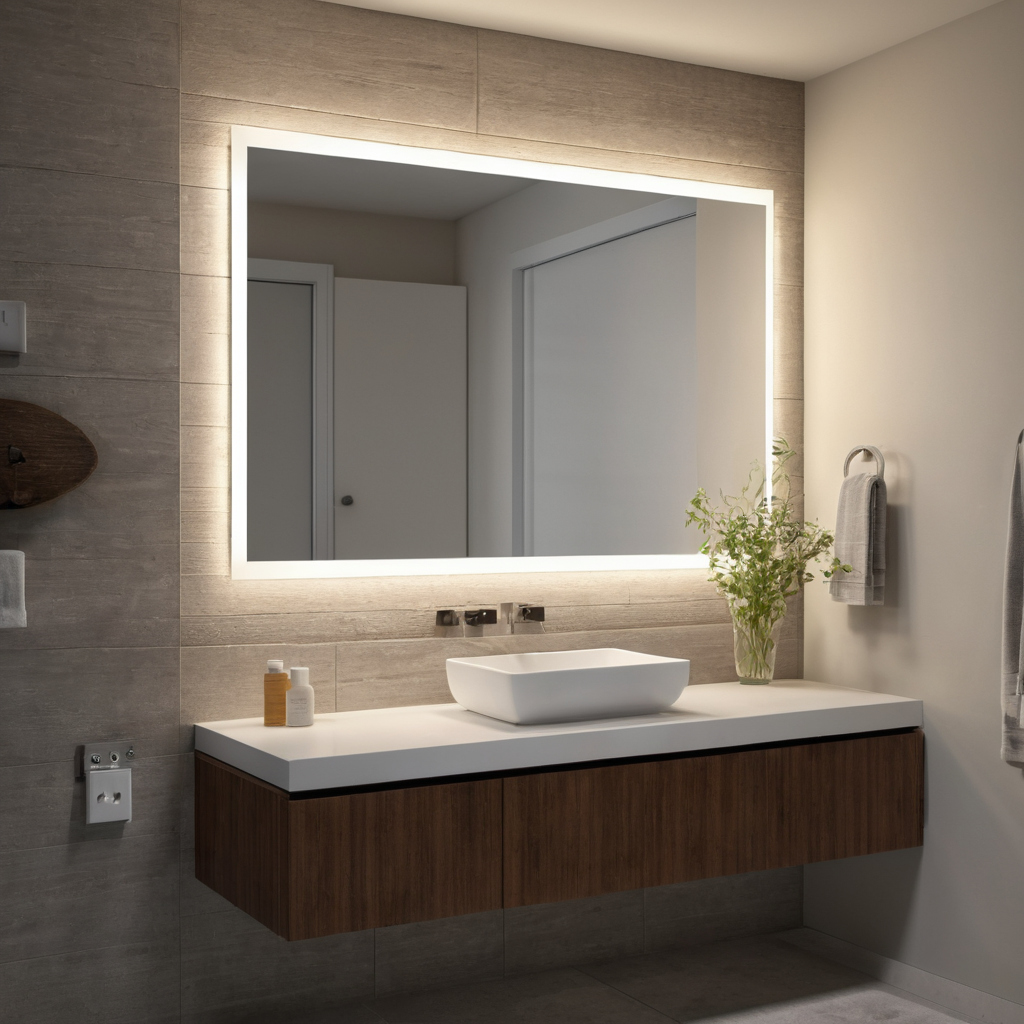
Will a mirror overlay interfere with outlets, lighting, edges, or the finished bathroom design shown as an editorial reference for proportion and finish coordination.
How should the new mirror be sized over the old bathroom mirror?
Prepare a measured elevation showing the vanity, faucet, backsplash, electrical fittings, lighting, ceiling, both mirror perimeters, frame depth, and cabinet or door swings.
- Build a paper or painter’s-tape mock-up and view it from the doorway and basin.
- Use a smaller overlay only if the exposed border is even and undamaged.
- Choose full coverage, a controlled reveal, trim, or a retaining frame as a deliberate edge treatment.
- Check for double-edge reflections and gaps that cannot be cleaned or dried.
Can a bathroom mirror cover an outlet or electrical fitting?
Do not conceal an electrical box, receptacle, switch, junction point, or required cover behind fixed glass. A licensed electrician should review designs near tubs, showers, luminaires, defoggers, integrated LEDs, or concealed wiring. Required openings should be factory fabricated with suitable edge clearances.
What is the correct workflow for installing a mirror-on-mirror bathroom assembly?
A safe workflow starts with documentation and measurement, not adhesive.
Measure and calculate the new bathroom mirror’s weight before ordering hardware
- Survey the glass, attachment, substrate, edges, moisture, and electrical interfaces.
- Calculate the weight of the glass, frame, backing, rails, lighting, and defogger using fabricator data.
- Specify compatible adhesives or rated hardware and complete electrical changes before fabrication.
- Mock up the elevation, protect the vanity, prepare surfaces, and dry-fit the assembly.
- Mount with suitable handlers, protection, spacers, setting blocks, and temporary bracing.
Temporary support must remain in place for the manufacturer’s full cure period
Follow current instructions for bead depth, ventilation, fixture time, and full cure. Confirm whether mounting tape is temporary, permanent, or prohibited. Remove supports without levering against either mirror, then inspect every edge.
When is removing or updating the existing bathroom mirror the better choice?
Remove the original when its attachment is unknown, the glass or wall is deteriorating, electrical components must move, or the overlay adds substantial size and weight. Choose a frame-only update when the mirror and support remain sound. Review related bathroom remodel scope decisions.
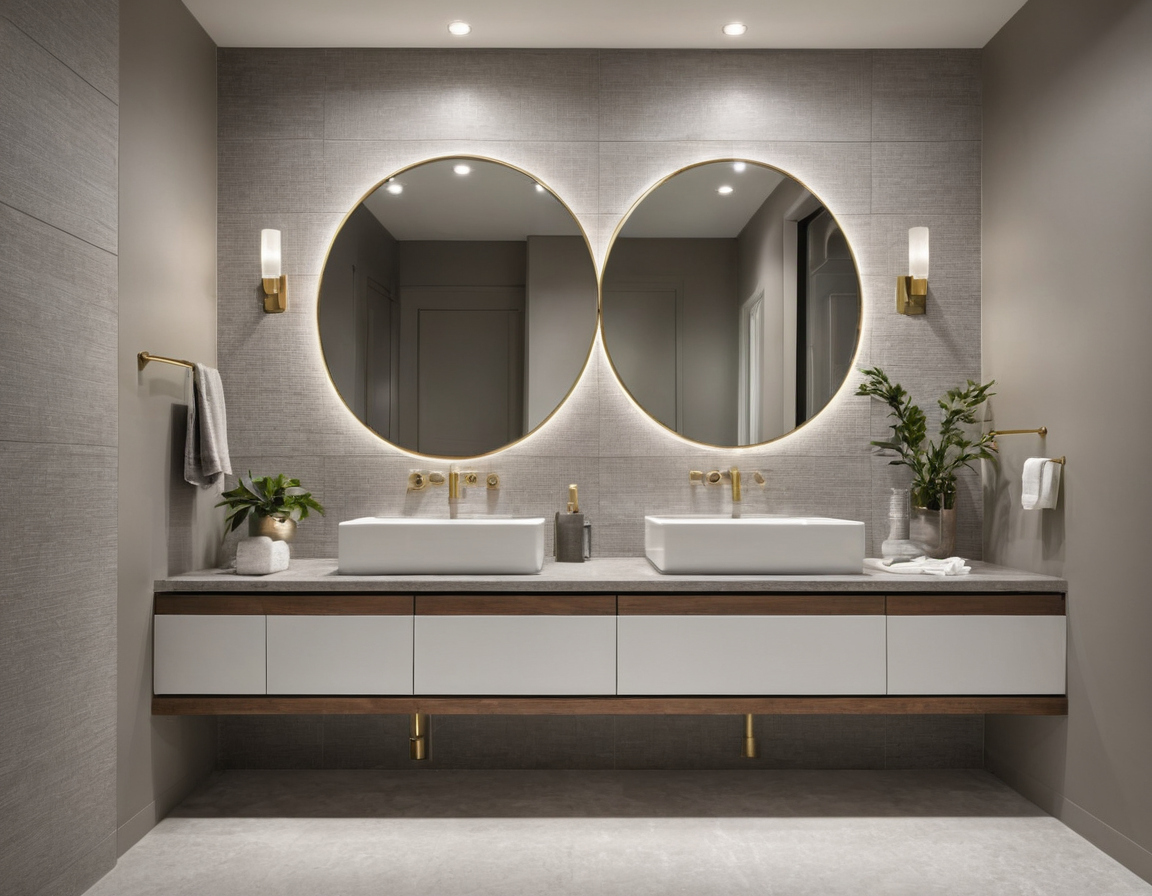
When is removing or updating the existing bathroom mirror the better choice shown as a planning reference for layout, scale, and material decisions.
| Option | Best condition | Main constraint |
|---|---|---|
| Overlay | Verified independent load path | Added weight and depth |
| Frame-only update | Serviceable existing mirror | Edge and adhesive compatibility |
| Removal and replacement | Damage, moisture, or electrical changes | Wall repair and disposal |
| Medicine cabinet | Storage justifies wall work | Framing, plumbing, and wiring |
How can you update a plain bathroom mirror without adding another mirror?
Purpose-made frames, compatible trim, replacement clips, and improved lighting can refresh the room with little added load. Confirm that trim adhesive will not attack the backing or silvered edges and that the frame will not trap moisture. ENERGY STAR states that qualified LED lighting uses at least 75 percent less energy and lasts up to 25 times longer than incandescent lighting. Renters should obtain approval before drilling or bonding.