Which Dubai Renovation Spending Comes Back at Resale, and Which Does Not
Renovation money in Dubai divides into three groups: work that returns most of its cost at resale, work that returns part of it, and work that returns nothing while narrowing the buyer pool. The dividing line is not quality. The dividing line is how many future buyers want the same thing.
Recovery rates by room, and why bathrooms lead
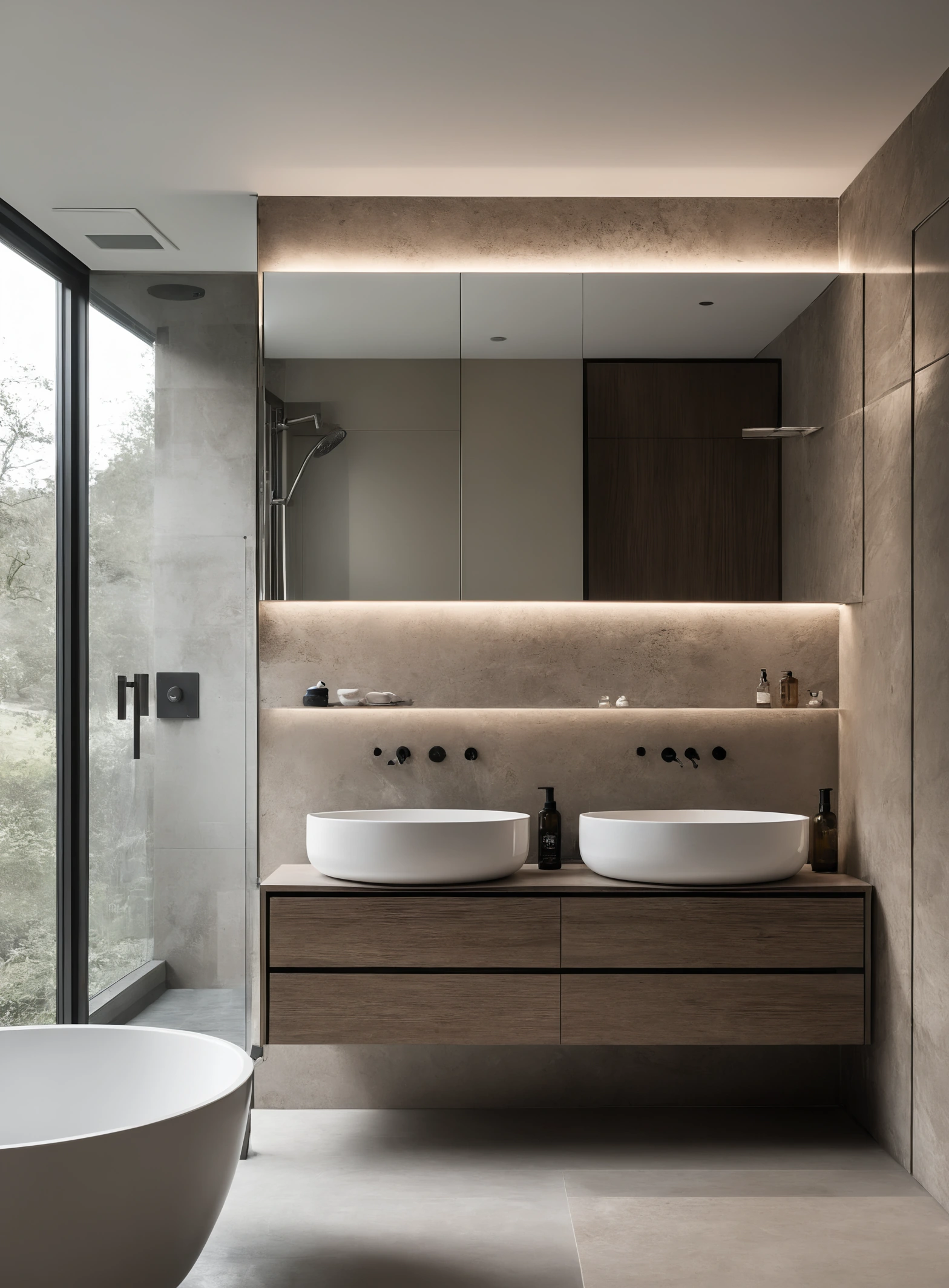
Bathrooms and kitchens recover a larger share of renovation spend than any other room in a Dubai property, because both are expensive to replace, both are inspected closely by buyers, and both signal the overall condition of a home. Rooms whose value depends on personal preference recover least.
| Work | Share of spend typically recovered | Why the market prices it this way |
|---|---|---|
| Bathroom renovation | 55 to 70 percent | High replacement cost, visible condition, universal demand |
| Kitchen renovation | 50 to 65 percent | Same as bathrooms, reduced where the layout is unusual |
| Pool and landscaping | 40 to 65 percent | Strong in villa districts, weak where plots are small |
| Flooring replacement | 35 to 55 percent | Improves the whole property, rarely valued separately |
| Lighting and electrical upgrade | 25 to 45 percent | Felt rather than seen, difficult for a buyer to price |
| Bedroom conversion or removal | Negative | Reduces bedroom count, which is a headline search filter |
| Highly specific single-use rooms | Negative | Buyer pays to undo the work |
Bedroom count deserves separate attention because property search filters operate on it directly. A five-bedroom villa converted to four bedrooms with a larger primary suite drops out of every search that specifies five bedrooms, regardless of how well the conversion was executed. Search filters do not read quality.
The buyer pool test predicts recovery better than cost does
A single question predicts resale recovery more accurately than any cost calculation: how many likely buyers would have paid for this work themselves. Work that most buyers want recovers well. Work that a minority wants recovers poorly even when the workmanship is superior.
Resale value rewards work that a stranger would have commissioned. Personal taste is paid for in use, not in price.
Applying the test produces clear guidance. New bathrooms, sound cooling, good storage and repaired waterproofing pass, because nearly every buyer wants them. A wine room, a dedicated cinema with fixed seating, a home gym with rubber flooring and mirrored walls, or a bespoke aquarium wall fail, because each serves a fraction of buyers and each costs money to remove.
Budget scale relative to property value
Renovation budgets in Dubai commonly sit between 7 and 10 percent of property value for a comprehensive refresh, rising well beyond that for a full reconstruction of interiors. Spending materially above the band rarely returns proportionally, because the ceiling price in any given district is set by location rather than by finish.
- Cosmetic refresh: paint, lighting fittings, window treatment, minor joinery. Roughly 2 to 4 percent of property value.
- Standard renovation: bathrooms, kitchen, flooring, full redecoration. Roughly 7 to 10 percent.
- Full interior reconstruction: layout changes, services replacement, bespoke joinery throughout. 15 percent and upward.
- Reconstruction beyond district ceiling: spending that lifts a property above the highest price achieved in its district. Recovery approaches zero on the excess.
District ceiling is the constraint that owners most often ignore. A villa in a district where the highest recorded sale is AED 9 million will struggle to sell at AED 13 million regardless of the interior, because buyers with that budget shop in districts priced accordingly.
Market depth explains why neutral work sells
Dubai’s transaction volume creates a wide, fast buyer pool. The Dubai Land Department recorded 226,000 transactions worth AED 761 billion during 2024, and transactions reached AED 252 billion in the first quarter of 2026 alone, up 31 percent year on year.
Wide pools reward properties that appeal broadly, because a broad-appeal property receives multiple offers and sells at pace. Narrow-appeal properties in the same market wait for the specific buyer who shares the previous owner’s preferences, and waiting has a carrying cost in service charges, financing and opportunity.
The luxury segment behaves the same way at larger numbers. Knight Frank research on branded and prime residential markets shows sustained demand concentration in recognisable, well-specified product rather than in idiosyncratic one-off homes.
Invisible work that protects value rather than adding it
Some categories of Dubai renovation spend do not raise a sale price and still justify their cost, because their absence reduces the price or blocks the sale entirely. Treating those categories as investments produces disappointment. Treating them as maintenance produces accurate expectations.
- Waterproofing repair. A damp patch discovered by a buyer’s surveyor triggers a discount far larger than the repair cost.
- Electrical compliance. Non-compliant additions found at survey delay completion and invite renegotiation.
- Cooling system service life. Equipment near the end of its life transfers a known future cost to the buyer, who prices it in.
- Approval documentation. Alterations carried out without approval from Dubai Municipality create a gap between the approved drawings and the property, which surveyors flag.
Where design fees fit the return calculation
Design fees on a Dubai renovation appear as a cost with no direct resale line, and they change recovery indirectly by preventing expensive errors. A layout revised on paper costs a fraction of a layout revised in blockwork, and a specification agreed before procurement removes the variation costs that inflate the final account.
Studios that handle luxury interior design in Dubai alongside procurement and installation absorb the coordination that owners otherwise manage between three or four companies. The measurable effect appears in the variation account rather than in the sale price.
Furniture sits outside the resale calculation almost entirely, because furniture normally leaves with the seller. Buyers specifying Italian furniture for a Dubai property should evaluate the purchase on years of use and on the resale value of the pieces themselves, not on any effect it has on the property price.

A rule that survives most situations
Spend heavily on what every buyer wants, spend moderately on what most buyers want, and spend from personal budget rather than investment budget on what only the current household wants. Applying that division at the briefing stage prevents the common Dubai outcome of an expensively renovated property that sells for the same price as a competently maintained one nearby.
Renovation improves daily life reliably. Renovation improves sale price selectively, and only where the work matches what the next buyer was already looking for.